
40: The Bible Recap (with Tara-Leigh Cobble)
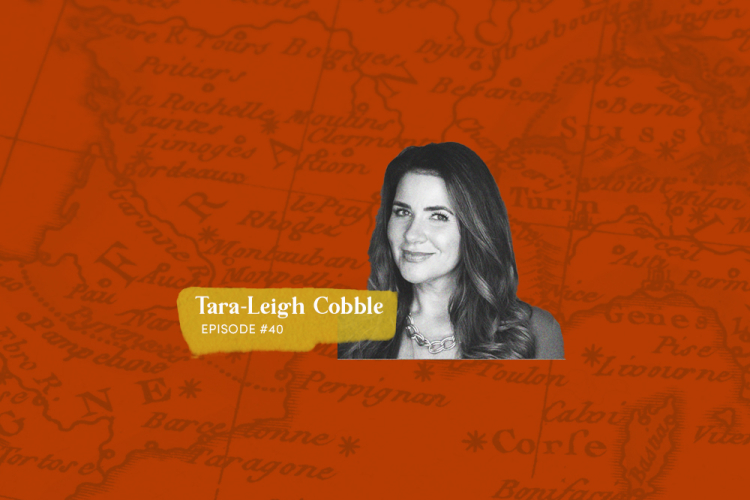
Guest: Tara-Leigh Cobble
Tara-Leigh Cobble, founder of D-Group and The Bible Recap, shares about the transformational experience of reading through the Bible and growing in relationship with the God of the Word.

- “What you see when you read the whole Bible in order is that the character of God is consistent throughout.”
- “Scripture is a relationship with the living God.”
- “It’s not a box to check; it is air to breathe.”
- “When you feel a responsibility to teach through it or lead through it, you really try to access deeper things because you realize you can’t coast… Then you get to engage with the zeal that they have.”
- YouVersion Bible App
- “Stop looking for yourself. Look for God, look for His character... What is His heart bent toward?”
- Psalm 145:17
- “Focusing on my sin humbles me, but it also produces this great gratitude in me that God has pursued me in that space, and it draws me to Him. It causes me to delight in Him all the more; it helps me recognize my need for His Word.”
- James 5:16
- “What the Lord has called you to, you know that He will carry you through. What He initiates, He will sustain and He will fulfill. He will carry on to completion what He has begun in you.”
What’s changing our lives:
- Keane: Changing the alternator in my car
- Heather: Podcast stickers
- Tara-Leigh: Contigo stainless steel water bottle
We’d love to hear from you! podcast@teachbeyond.org
Podcast Website: https://teachbeyond.org/podcast
Learn about TeachBeyond: https://teachbeyond.org/
Read the Transcript
Show full transcript — 42 mins
Keane: Welcome to Transformed and Transformational. I'm Keane.
Heather: And I'm Heather. We're here to explore what it means to be transformed in our own lives and what it can look like for us to be used by God to make an impact. How's it going, Keane?
Keane: It is going very well, but I know especially for you today that you are really excited.
Heather: That's true. Today our guest is Tara-Leigh Cobble, who is an author and speaker, the founder of a discipleship and Bible study ministry called D-Group, and most likely how you've heard about her is the host of The Bible Recap podcast.
Keane: Yes, several of our guests during season 1 mentioned The Bible Recap as what was changing their lives.
Heather: Myself included. So I'm, this is why I'm particularly excited to hear from Tara-Leigh today. This is my 3rd year reading through the Bible with The Bible Recap, and it has been a game changer for me.
Keane: That is awesome. The Bible Recap kicked off the New Testament on October 1st, so it's not too late to subscribe to that podcast and jump into reading through the New Testament. You just have a week to catch up on it if you're listening to this on the day it releases.
Heather: And actually, you should know that what you're catching up on is the Christmas story, so it's not even that hard to get caught up. But of course, any day is a great day to begin with day 1 of reading through the whole Bible, so you don't have to wait for January 1st or even the first of a month.
Keane: Whether you're reading through the Bible this year or not, diving into scripture is transformational. We believe that God uses his word to challenge, guide, encourage, and grow us more into his likeness. So we're excited for this conversation with Tara-Leigh today. Let's go over to that now. Hi there. We're so glad to have you joining us on the podcast today. Welcome.
Tara-Leigh: I'm so happy to be here with you guys. This is fun.
Heather: This is so fun. Well, some of our listeners like me, Tara-Leigh, have been walking through The Bible Recap, with you this year, so your voice is very familiar to us, and others are brand new to learning about The Bible Recap, or maybe even the idea of reading through the Bible chronologically at all. So we're really excited to dive into this topic together today.
Keane: In light of that, maybe we can just start off right there. Um, what would you say is the value of reading through the whole Bible chronologically, or going through just the whole thing at all?
Tara-Leigh: We love story, right? We're people of story. We don't We don't want to show up at the movie theater halfway through the movie. We don't want to start the series halfway through. We want to start at the beginning. We want to binge the whole thing in order. That's how we connect, is we connect at a heart level with story. And so this is the story of God and who he is and the way he's chosen to reveal himself to us. And so what better way to get to know him than the way we like to get to know anyone?
Keane: Is there anything that's better understood reading through the whole Bible as, as a whole versus the kind of this piecemeal that most people do?
Tara-Leigh: Oh, yeah. I mean, I think so. As somebody who grew up in church and, and got the Bible piecemeal, you know, that's how, that's how most of us actually get it is in little pieces at a time. And we get it out of order, and we don't know where things fall. And I think a lot of us, the natural way that most people tend to view God is in these 2 categories of like Old Testament God and New Testament God. As though he got a personality transplant between the two. Like we think Old Testament God is like mean and angry and like ready to just like throw lightning bolts out of his fist at anybody who dares, you know, defy him. And what you see when you read the whole Bible in order is that the character of God is consistent throughout. You see, um, the person of Jesus, like Jesus says the Old Testament is all about him. And so you see the person of Jesus, the character of Jesus, and the actual person of Jesus showing up in the Old Testament in ways that are kind of shocking and delighting. And, um, and so just, I think the character of God is best understood when we read it chronologically.
Heather: Well, I've certainly benefited from seeing the entirety of the metanarrative of scripture and have also wondered, how do we balance reading through the Bible in a year and getting that big picture story all at once, which is also a pretty quick pace, uh, with also diving deeper to study scripture more, more deeply, slower pace, maybe, um, doing more research Yeah, that happens, right?
Tara-Leigh: When you're reading through and you land on something, you're like, oh, I want to jump into this. And then you're like, but I got to keep going. Uh, and so that, that question that you just asked, I think hits on something really important. I like to make a distinction between reading the Bible and studying the Bible. And so what we're doing with The Bible Recap is we're reading the Bible. We're not really studying it. We're reading it. We're just learning the story. And so, If I'm talking to you, Heather, and like you are telling me your life story, and you tell me something like a major event that I want to drill down on, I'm going to make a mental note that like, hey, I want to ask her about that later. But I'm not going to interrupt your giving me your life overview to make you tell me this one story in that moment. I'm going to come back to it. And so that's sort of what I do when I'm reading through scripture is I make these notes of things I want to dig deeper on. And usually I try to find like, A day a week. My Sabbath is usually when I do this, um, where I'm like digging deeper into the questions that I want to ask, the things I want to study. And then this is also why, you know, The Bible Recap was born out of this, this ministry that I've been stewarding for about a decade, which is called D-Group. It stands for Discipleship Group. And in D-Group, what we do is we get together every week and study the Bible. And so I was meeting all these people who I was studying the Bible with, you know, hundreds of D-Groups around the world. were studying the Bible, but most people hadn't read the Bible. And so they didn't know where to put these stories. So that's why we started The Bible Recap, was to help people read the Bible. And then they know where to put the things that they're studying. And so I do both. I read the Bible, and then I also study the Bible. And so I'm usually doing a deep dive in scripture somewhere and doing that as part of D-Group. And then I'm reading the Bible with The Bible Recap. And I think both really are necessary to forming a rich relationship with God. So like, I'm not a married person, but from what I hear, when you're married, you, you want to have like time with your spouse. Like maybe you want to have your weekly date night, but then also if that's the only time you ever talk to them and you don't, you know, talk to them every day a little bit, it's probably not a good relationship. Whereas if also, if you only talk to them a little bit every day and never do like a deep dive, that's not as healthy as it could be. You want to have both. You want to have that daily, normal everyday conversation. And then you also want to have the deep dive time.
Keane: That kind of answers my question of, you know, every— doing a devotional every day is a really helpful, healthy thing to do. And so some people could do The Bible Recap as your daily devotional and then be like, okay, I'm done. But really, you do still need those other times to do the deeper study.
Tara-Leigh: I think those are— I think they really help round out, because the thing is, you know, This is a relationship. Scripture is a relationship with the living God. Like, you are engaging— the Holy Spirit who lives in you as a believer is connecting with the words that he wrote about who he is to reveal himself to you. This is engaging in a relationship. You're not just consuming information. It's not a textbook. It's not those things. It is a relationship. And so, To treat it as such is really helpful in understanding how to approach it, um, as opposed to just going to it for answers or information or guidance or encouragement, to see that you are engaging with the living God.
Heather: It strikes me that that's also the approach to that time, that it's not the checklist that we can often get into, like, okay, I did that today, I'm done, moving on. That's important for building the muscles of routine and consistency, which I know has been really helpful about having, okay, this is what I'm reading today. I know exactly what the plan is. But if we get too stuck in that plan, it can, you know, kind of detract from the relational aspect of it. So I love that reminder. It's, it's, it's part of building our relationship with the Father.
Tara-Leigh: Yeah, absolutely. And I mean, you know this just as well as anyone because you just You just mentioned to me that you are now on your 3rd trip through The Bible Recap. Like, you didn't just check the box of, okay, I've read the whole Bible now, we're done. I can put it away and never have to deal with it again. Like, I want to tell people, yes, you should want to read the whole Bible, but don't make it a bucket list item that you check off because once you finish it, your goal should be to keep reading it for the rest of your life. Like, it's not just, it's not a box to check. It is air to breathe and you want to engage with it. Every day for the rest of your life as a believer, every day in this relationship. It's the most important relationship we have.
Keane: This is something you're doing throughout the years, and you've been doing it for a long time. So is there a specific part that you're looking forward to this coming year? Do you just— a section of the Bible, some of the verses that you really, you love studying?
Tara-Leigh: That's a great question. Um, I think I really love the places where we dip into the Psalms. Now, of course, we dip into the Psalms When you're reading chronologically, you don't just read all the Psalms in a row. You read them as they correspond to the stories that they are written in response to. So for instance, you, you know, you read about the sins that David committed against Bathsheba and Uriah, and then you go and you read the Psalm of Repentance that he wrote, um, and things like that. And so you're reading them as they correspond to the study. But I, I always love when we hit the Psalms because we're hitting them in some of the parts of scripture That, um, for some people feel drier. And so they're like this, this breath of fresh air, this poetry that shows up. But I'm also really looking forward to a couple of things. Um, I'm looking forward to Hebrews, um, because I have a massive crush on Apollos. And I think Apollos maybe wrote Hebrews. Every time we go through Hebrews, I'm kind of like, who wrote this book? What can I learn about them? What can I— I'm just sort of like. I enjoy turning that mystery over in my mind every time I read Hebrews. I don't expect to ever have an answer on this side of eternity, but I really like, um, reading it with a lens for maybe a different alternative anytime I read it.
Heather: That's awesome. And just thinking in general about the keeping it fresh as we continue to read scripture, I know we've talked about it being in the context of a relationship and Knowing the bigger story, what are some things practically that help you as you approach scripture, whether it's a deep dive, I guess, or this, you know, trip through the whole Bible in a year? Um, what helps to keep it fresh and keep you focused during your time with the Lord?
Tara-Leigh: You know, we do this thing in The Bible Recap, and I also, I want to hear your answer to that too, Heather, because, uh, like you're doing this with me for the 3rd time and I want to hear what keeps it fresh for you, you know? Um, But for me, one of the things that keeps it fresh is I love discovering new things. I love treating it like a treasure hunt. What new connection can I make? What new thing can I see about God? You know, I've taken tons of notes in my journals and in my Bible margins through the years. And I want to find something new to write in there. I love that. I love discovering something new about God. What about you? What do you, what keeps it fresh for you?
Heather: Yeah. Well, what's been really neat for me is each year I've done it with a different group of people. And so I think what's fresh for me is getting to read in community or in connection with a community. So the first year was with my local small group. So we were physically meeting once a week and talking about it, um, which was awesome to, to have that. And then, you know, this year it's a few people from TeachBeyond. Um, and so we're all in different parts of the world and we get to meet once a month. So then it's a lot more content that we're breaking down. What keeps it fresh for me is having a reason to look for something that I can then share and also hearing their perspective. So I'm a huge fan of, and, you know, encourager of people doing this in community, because I think it's not only accountability, but you also see something different.
Tara-Leigh: So, you know, you touched on something that I think is interesting is how much more you dig into something when you feel a responsibility to teach through it or lead through it. Um, you really try to access deeper things because you realize you can't coast, you know?
Heather: Yeah.
Tara-Leigh: And so I think that's one of the things that can be really helpful is taking somebody else through it after you yourself have been through it and helping them. And then you get, you get to engage with the zeal that they have because maybe there are times when it does feel, feel dry. Like, oh, I've done this so many times, but then when you watch somebody else fall in love with it or discover something new, it like makes it brand new and exciting for you all over again.
Heather: Yeah, and seeing them say, hey, can I invite my friend into our little group? And I'm like, yes please, because that means someone more is joining in and wanting to read scripture. So yeah, yeah, it's been great.
Keane: Can I ask about the drier sections that people kind of struggle with? So I have not done The Bible Recap, but things like Numbers where people just kind of get bogged down by the list of things, the chron— the series of people, the numbers, the measurements. Um, do you have words of encouragement for them? Things that you find that you share that you find to enjoy and kind of learn from in those areas?
Tara-Leigh: Yeah, a couple, a couple of things. Um, and then I also, I kind of want to hear Heather's answer for this too, of what she thinks is, is, uh, has been helpful. This is, it's fun to like have your lens on it, you know, but I, a couple of things that I like to do with people who are having a struggle in the dry sections. We have this thing called the God Shot where every day we're looking for the character of God as it's displayed in what we've read. So when you hit the genealogies, you know, uh, that is a really challenging space. But man, when you have a, when your job is not just to read it, but to find something in it, to me, that makes it an adventure. That makes it, that makes it fun. Like, why would God, what is, what does God want me to see about who he is based on what I just read about so-and-so beget so-and-so beget so-and-so?
Christine: Yeah.
Tara-Leigh: That is really a fun challenge for me. Also, when it, when it is a day that it's really hard and dry, one of the things I just, I remind myself and others is like, this is basically 12 minutes of reading, 12 minutes of reading a day. You can read the whole Bible in a year in about 12 minutes a day. And so you can do that, you know, and if all I've learned that day is discipline, then maybe that's what I needed to learn that day.
Heather: Yeah.
Tara-Leigh:If all I've done is learn how to keep looking for God, then I didn't give up. I didn't let boredom win. I didn't let my selfishness win. I sat in my relationship with the Lord to see what he'd written on the pages of his word. Another thing is, you know, in those drier sections, especially in the genealogies where it's just these names and you get hung up, like, am I even reading this right? Like, I don't even know how to string these consonants together, um, is to use the audio version of the Bible, the Bible app. YouVersion has the Bible app. It'll read it to you. And maybe that's really helpful for people who are audio learners, where their mind tends to disengage if they're reading it with their eyes. Read it with your ears. And those are ways that can really help it come alive and can help you dig in, in those spaces that are challenging for you.
Heather: Yeah, definitely. I actually listen every day. So that has been really helpful because I will just go right through the parts that I think I know. And so that helps me slow down in general. So I definitely second that. I also am so encouraged when Tara-Leigh says on the podcast, uh, this might be a harder day. I'm like, good, I'm glad I'm not alone in that. Um, so, you know, just acknowledging, like, you know, sometimes there are things in scripture that we encounter that are difficult, and it's not even just the numbers or the description of the temple or, you know, the things that may seem a little bit drier, but also the things that are hard.
Christine: Yeah.
Heather: That we maybe want to shy away from, that we, you know, the stories that we don't really want to read. I think it's good to have to lean into those as well. And even if all it is, is again, allowing that scripture to fall on my ears and my heart, the Lord is working in that. And, um, I don't, it doesn't have to be like the most dramatic thing every single day. Yeah.
Tara-Leigh: It's, it's just like any other relationship. Not every conversation you have with your spouse or your child or your best friend is going to be life-altering and the most thrilling ever. Like sometimes it is very dry, you know, but that's part of the relationship is getting all of that, all of it.
Christine: Yeah.
Heather: You mentioned the God shot and this is every day in the Bible Recap podcast, specifically identifying where we see who God is that day. So I'm thinking bigger picture, you know, to the meta narrative, to the whole relationship thatwe have with the Lord. What is something that you go back to, a characteristic of who God is, or even just an overarching idea, um, that keeps, that you keep at front of mind in, as you think about a God shot, a big picture God shot?
Tara-Leigh: It's pretty hard for me to get through a page of scripture without recognizing God's sovereignty jumping off the page. Like his sovereignty is just, and I'll tell you, that was real hard for me first time through. Real hard for me. Um, I hadn't heard it taught about a lot. I hadn't engaged with that idea a lot. In fact, I'd engaged with— I'd engaged more with other ideas about, um, me and my self-determination and me making things happen. And, um, and just really, it was an affront to me and, and my idea of who I am. Uh, and so I really wrestled with God's sovereignty my first trip through. Did, did not— I didn't like him.
Christine: Yeah.
Tara-Leigh: When I finished, I was like, I'm in ministry and I just finished reading the Bible and I don't really like God. So maybe I need to go become a barista. Like, I don't know, what do I do now? Um, and I talked with a pastor friend of mine and that's when he said, stop looking for yourself. Look for God, look for his character. Stop looking for yourself. Stop looking for your to-do list. Stop looking for what you think God owes you. Look at what he loves, what he hates, what motivates him to do what he does.
Christine: Hmm.
Tara-Leigh: What is his heart bent toward? And when I, when I started looking for that, I fell in love with him. And suddenly, his sovereignty didn't bother me anymore because I trusted him. I was grateful for his sovereignty because that, that was what rescued me from myself, you know, from all of the things that I had wished for and tried to make happen. And the things that had fallen through in my life.
Christine: Hmm.
Tara-Leigh: His sovereignty was a soft place for me to land. And so sovereignty is one of the overarching God shots throughout the whole of scripture. But the thing that sort of makes that a soft place to land is, is what I find about him in Psalm 145:17, which says, the Lord is righteous in all his ways and kind in all his works. So not only is he in charge of everything, but whatever he does is right, and just, and kind. Like, it's whatever he does is his greatest kindness to me. Anything different, anything less, anything other would be less kind.
Heather: Yeah, our faithfulness to walk in obedience to him stems from his sovereignty because we know that he is, he is working on our behalf and he is kind. That's so good. So good.
Tara-Leigh: So good.
Keane: What's something you've changed your mind on in the process of creating The Bible Recap? So maybe Similar to the sovereignty, something you've read and you see and you've thought, this is the way it works. And then as you go through the whole Bible, you say, wait a minute, I was wrong about this perspective. This was— I was off.
Tara-Leigh: Right, right, right. Uh, man, I'll tell you, I have lots of places in the margins of my Bible where I have marked through things I wrote in there that I was just sure about. Um, but I will, I will say one thing. Now, this is, it's kind of controversial. Um, I am of the, and I hold this with an open hand, like a lot of people I respect are going to disagree with me on this, this one particular thing. Um, and that's okay. We're still friends. We all still love the Lord.
Heather: We can disagree and still, still be, you know, good friends on this.
Tara-Leigh: I think Jesus died on a Thursday. I don't think he died on a Friday. I really do. And I have like a whole, I could, I could give you a mini sermonette about it right now. And I could even launch into some Greek words and all these things, but there, I think there is significant evidence for the fact that Jesus died on a Thursday, and it's not just based on the fact that he said the Son of Man will be 3 days and 3 nights in the belly of the earth, um, just like Jonah was 3 days and 3 nights in the belly of the whale. That was the verse that got me started thinking about it, because I was like, if he died on a Friday, you can't get 3 days and 3 nights out of that, especially not the way the Jews kept track of days, which was the day started at sundown.
Tara-Leigh: that was what started me on the deep dive, and then I'm going into like The kind of bread that he ate, like the, the bread that he's eating at the Last Supper, never mentioned— it never mentions the Passover lamb, like, which is really symbolic because he is the Passover lamb. And so they're not eating the Passover lamb because he hasn't yet been sacrificed. What the kind of bread he's eating is this, uh, leavened bread. The word that he— the word for the Greek word for the bread he's eating is a leavened bread, which is kind of like this clean out the fridge type feast they have before Passover begins where they have to get all the leaven out of their homes.
Heather: Yeah.
Tara-Leigh: Personally, I think he died on Thursday.
Keane: I've never heard this argument before. So this is something that, something to think about and look into. This is great.
Tara-Leigh: I like having these little like, what moments where I just get to dig deeper and explore and treat it like an archaeological dig that I'm on in scripture.
Heather: I love it.
Tara-Leigh: Who knows what we'll find?
Heather: I love that. I know that you have, um, taken trips to Israel over the course of the years with, um, D-Group and now probably with Bible Recap listeners as well. How has that been transformational in your understanding of scripture? I mean, how has it not? But what would you say to that?
Tara-Leigh: Oh, Heather, yesterday I was reading through some old journals. I like to do that sometimes on, on my Sabbath. It's just like read through and see what the Lord has done. And I read through the journals from my first trip to Israel in 2012. And I'm telling you, it unlocked something in me that no other place can touch. And I can't even. The only way I can describe it is like, it feels like when you like fall in love with someone and then you go home and you meet their family and you're like, oh, this is, this is why you are the way you are. Like, now I understand where you got all these amazing things about you. Now, now it makes sense why your hair is that color. And now it makes sense why you laugh with the, like why your voice sounds like that when you laugh, you know, like, and you just sort of get it. You know, and it wasn't that I didn't love him before. It, it, uh, it wasn't that I didn't love scripture before. I don't want anybody who hasn't been to Israel or won't ever get to go to Israel to feel like they love God less because of that, you know, but it just really did connect me to scripture in a way that, you know, now when I open my Bible, I'm hard pressed to be able to, like every page I can visualize what I'm, what I'm reading. You know, I just, I love getting to go there. I love getting to lead people around. And, and honestly, what happens to me on those trips, since I get to lead other people on these trips and talk about scripture while we're there, is just what we were just talking about, about when you teach it to other people and you see the zeal that they have and you see them come alive and you see them learning something. It just makes me love it all the more. I get to watch other people fall in love with Israel. And the word of God and the God of the word. And it just, it lights my fire. It's my favorite.
Heather: That's great. Thinking of all of the places that you've been in Israel, um, what's one that has really changed the way you read that particular story or you envision that, you know, the events that happened in that place?
Tara-Leigh: Uh, so the Garden of Gethsemane is It's at the foot of Mount of Olives. So it's this mountain, but it's more of a hill, to be honest. So it's like the hill, you know, everything there has this magnificent terminology, like the Sea of Galilee, but it's more like a lake or like a really, really big pond, you know, everything's so much smaller than we imagined. So the Garden of Gethsemane is just steps away from— it's the Kidron Valley is on the other— it's like the Kidron Valley is between the Old City of Jerusalem and the Garden of Gethsemane. And it's, it's just right there. You can see the gates. If somebody walked out of the gate, you could see them. So to imagine Jesus in the Garden of Gethsemane on the night before he died, the soldiers who've come to arrest him would be carrying torches to walk through that valley. He would have seen them coming. He could have run up the hill and into the Judean Desert and escaped, and no one would have found him. But he's standing there and you can surely see them coming through the valley with their torches at night to arrest him. And yet he stays and he watches them approach and you, he could watch the whole journey that they would have taken to come get him from the minute they left the city. And, uh, just to imagine, you know, scripture tells us that he knew all that he would endure, yet for the joy set before him, he endured the cross. And that is just— Incredible to me, just the immense love that he had, the commitment to, um, the plan for our salvation and, and redemption and, um, all of that. You know, it plays out in this tiny little plot of land where he could have run and he didn't.
Heather: Great perspective.
Tara-Leigh: You got to come with me sometime.
Heather: I, it's on my list. Many of our listeners have been, are considering, or are currently in vocational ministry, as in their job. is something within ministry officially. Um, and so what suggestions do you have for those people specifically staying grounded in the word when others may put them on a pedestal or assume that they know more or whatever?
Tara-Leigh: One thing, this is going to sound counterintuitive, but one thing that's been really helpful for me is having a place where I regularly am confessing my sin out loud. Um, so for me, that's, that's with my prayer partner in D-Group, my accountability partner.
Christine: Here's—
Tara-Leigh: I know it's counterintuitive to say that focusing on my sin keeps me grounded in the Word, because for some people, focusing on your sin would make you, like, feel shame in a way that, like, you don't want to engage with God because you feel ashamed. But what happens when we confess our sins is it humbles us. And humility is the first step. Like, Jesus— like, spiritual poverty is where we all— that's square one for everybody.
Heather: Yeah.
Tara-Leigh: Is recognizing we have nothing to offer a holy God. And what God did in the space of our sin is not turn his back. It's not run. That's where he leaned in. That's where God pursued sinners who were running from him, by the way. Like, sin is running from God and God is chasing down Adam and Eve to clothe them. And so God pursues us in our sin. So when I am aware of my sin, And I am humbled and I recognize I have nothing to offer God, then first of all, that's going to really, um, take me down from any pedestal I might've put myself on or any pedestal that others might make me think I belong on. Um, and so focusing on my sin, it keeps, it humbles me, but it also produces this great gratitude in me that God has pursued me in that space and it draws me into him.
Heather: Yeah.
Tara-Leigh: And so it causes me to delight in him all the more. It helps me recognize my need for his word. And so confession of sin, James 5:16 says, confess your sins to one another and pray for one another that you may be healed. And so God does something in that space of confession to heal me from the sins that I'm afflicted with. God does something in that space of not just confession to him, but confess your sins to one another. So when I confess my sins, when I repent, When I ask for prayer, that helps me lean in to humility, which then will drive me further into God and his word.
Keane: Yeah, definitely. The power of confession is a great thing to, to stay humble and to stay grounded in who, who you are in comparison to who God is and just the vast difference between those two.
Tara-Leigh: And for all those people who are pursuing vocational ministry, I just, I want to, um, I want to just say, uh, I want to, I'm cheering you on. Like, you are not taking on a light calling. You are taking on a big, big calling. And what the Lord has called you to, you know that he will carry you through. Like, what he initiates, he will sustain and he will fulfill. That what he will carry on to completion, what he has begun in you, he is doing it. You know, we say in The Bible Recap, he does the doing. And so whatever he has called you to, he will equip you through. equip you to and, um, and for. And so, uh, I'm just— I'm cheering you on in that. It is not an easy task, but he does the doing.
Keane: Every week on this show, we ask our guests, what's one thing that's changing your life right now? And so I'll go first. I'll give you a little bit of time to think about it. For mine, it is changing the alternator in my car, which is a big task, which I did not even do, to be honest. It was my neighbor who did it, um, but I stood next to him and well, held the light for him, uh, to kind of help, help with some of the screws and finding the right pieces. But it was, it was a big moment in my life. So that was changing my life.
Heather: Success. For me, um, it is that we got podcast stickers. So I'm really excited. I have a few stickers on my water bottle that are creeping their way up and now it's this big red ampersand for our, our, uh, podcast. Um, cover art. So anyway, I'm really excited about that. What about you, Tara-Leigh? What's changing your life this week?
Tara-Leigh: Well, I know your podcast listeners can't see this, but I'm going to show you guys and then I'll just describe it. This is a water bottle that, um, I say it's changing my life. I've been carrying these for about 3 years, but I lost it. And so when I lost it until I found it again, I was like, I must get that. Like no other water bottle will suffice. And so I got it back and I'm so happy that I found it. It was beside my couch. Um, but it's a Contigo water bottle. And what I love about it is it, I get the stainless steel one. It doesn't sweat. Um, I drink a lot of water, a lot of water. And so it comes in all different sizes, but I have the 24-ounce. But let me show you my, one of my favorite things about it. Okay. I don't, I don't like having to use both hands to open a water bottle. So this is how you open it. You just squeeze this little thing at the top and it opens the spout. So one-handed functionality. But guess what? You don't want to put this, you don't want to put this in a tote bag and have that button get pushed and spill all over your Bible or your journal. We can't have that. So guess what? Contigo has this little lock tab on the top that won't allow you to press that button.
Heather: Well, we'll see if we can link to that exact one in the show notes so everyone can, uh, actually see this for themselves. Well, Tara-Leigh, I am so glad that my college friend Karen connected me with The Bible Recap and that we've been able to have this conversation today.
Tara-Leigh: She's a really formative part of D-Group, and I'm so grateful for her.
Keane: Thank you so much.
Tara-Leigh: Thanks for having me.
Keane: And now for a conversation with a TeachBeyond member who will be sharing the weekly spotlight and a story from the field.
Heather: Well, hi, Christine. I'm so glad to be able to connect with you today and talk a little bit more about what you've been doing in Bolivia. Welcome back to the podcast.
Christine: Thank you so much. It's good to be back.
Heather: Yes, and this time we're across the table from each other, which is exciting, and not on computers this time. And I, I want to dive into that a little bit in just a minute, but first I'd love for you to tell everyone a little bit about Santa Cruz Christian Learning Center, where you work. Tell us what ministry is like there and a little bit more about the school.
Christine: Sure. So it was— I have to go back to how it was originally established in the 1970s. It was originally built for missionary families who wanted a space for education for their kids. And so it started off as an MK school first, but then over the years it just grew and grew and more nationals and locals started to come to the school and also other expatriates that were from businesses and so forth. And so our school definitely has a diversity of cultures. I would say about 90% right now are Bolivian or Latin American of some sort.
Tara-Leigh: Yeah.
Christine: And then about 10% would be missionary kids, and actually in the 90%, we would also have expats from other countries, too.
Heather: Sure, sure.
Christine: Yeah, and it's definitely very ministry-focused in our teacher meetings and so forth. The emphasis is definitely on the fact that we are doing this for the Lord and not just teaching students academics, but also what Christ means to us, you know, through our lives and so forth. And, yeah, our school runs on an American school system, and by the end of their schooling. Our students graduate with both a Bolivian diploma and also an American diploma so that they can go to just about any college they would like to go to. So it's pretty cool to be a part of that school.
Heather: That's great. You mentioned the ministry focus. How does that play out in your classroom? What does that look like for you on a day-to-day basis?
Christine: Yes, so one of my main goals in teaching is not just to give my students information for English literature and so forth, but also, hey, let's talk about our biblical worldview and how this relates to what we're reading and so forth, and those are some of my favorite teaching moments ever. But also, too, I'm sure you've probably heard the phrase that students don't care how much you know unless they know how much you care. And so that has been a huge priority of mine since day one. I want my students to know that I care about them. And so God has definitely answered those prayers of building rapport with the students. And one of the ways that He's allowed me to do that is just taking even just 5 minutes in the beginning of class every day to just ask about prayer requests and praises and so forth. So the students feel this atmosphere and this community of acceptance in the classroom that I try to foster among them. And so that has been really cool to see. So, so there are different ways that we make sure to reach the students' needs for more than just the academics. Yeah.
Heather: Yeah. Community is so important, such an important part of developing the classroom environment. And that actually reminds me of what you shared when you were on the podcast back way back in episode 2 when we were focusing on virtual learning and talking about how technology had helped to build the classroom community. And I'm thinking now about, as you navigate hybrid and in-person learning, what are some things, if any, I guess, that you're wanting to bring now with you from this season of being in online learning?
Christine: So yes, there are definitely some things that I would like to incorporate that I have learned from my year of doing virtual learning as we go forward. And as you did I should point out we are doing hybrid learning first when we go back to school this fall. And so, I'll have some students in person and some students online. And one of the things that I had started doing when we did virtual learning was whenever it was somebody's birthday, I would do birthday shoutouts for the students. And so, I would just take a few minutes during the call at the beginning of the class time where I would tell the students to type up something in the chat and then click enter at the same time. And so, it was kind of a waterfall effect, which was really fun. And so, we would do that to just really acknowledge the, the and celebrate their birthday. And I would encourage the students to say something that they appreciate about that particular student and so forth. And so, that I think was one of the ways that the students felt connected and heard and understood and loved by their peers. And so, when we did go back to hybrid learning, which was the last couple of weeks of the school year this past year, I realized that, oh, I have some students online and some in person. So, how are we gonna do this? And what I did have my students in person do was to write their birthday greetings on a piece of paper, and then I took a picture of all those pieces of paper and would send an email of that picture to the student whose birthday it was, and they really appreciated that. And so, I'm thinking, you know, going forward, that would be something that I would like to incorporate when we have more students in person, maybe giving them like sticky notes and having them write birthday messages to the student whose birthday it is. And so, that's one of the things that I think I would like to do going forward. And so, that's part of the community aspect that I'd like to incorporate. And then also because of virtual learning, as an English teacher, I just discovered new technological tools that I don't think I would've discovered otherwise that the students really enjoyed. So, this is going to be very specific to being an English teacher, but—
Heather: Go for it.
Christine: One of the sites that I discovered was noredinc.com. And what's fun about that is that it asks the students when they first create their accounts to check off all of the different interests that they have, like with different shows or movies or celebrities or singers and things of that nature, and then it will create grammar sentences with those shows and characters in them. So, you know, for example, if a student checks off Lion King, then a sentence that they have to edit for grammar purposes would have something about Simba. And so I remember doing that with my 8th graders, and they were just having such a ball, like, sharing what their sentences were and what characters they had, you know, like, oh, it just said that I had lunch with Jack Sparrow today, or something like that. So, they enjoyed it. And even my 6th graders were begging me to start doing No Red Ink with them because they had heard about it from the 8th graders. So, that's something that I'd like to use more of going forward.
Heather: Well, thanks so much for sharing with us a little bit about what life has been like serving in your school and also what you're looking forward to going forward in this new season of teaching. One thing that we've connected over in the last year is actually doing The Bible Recap together. I've loved knowing that you're walking through the Bible with Tara-Leigh Cobble this year too. And so I'd love to hear what has been changing your life about going through The Bible Recap?
Christine: That's a really good question. And first of all, I am, I'm so, so thankful not only for The Bible Recap, but also for the community of people like you that I am doing this with and the video calls that we do once a month to just go over what we're learning. It just really has helped. Hold me accountable to continuing with the reading plan. I know I read through the Bible before when I was in Bible college, of course, but it was, it was great. But to be honest, I was not really driven to keep reading it on my own in the, in the future. And I would start Bible reading plans and then just kind of get a little bit discouraged when I'd miss a day or two and so forth.
Heather: Mm-hmm.
Christine: And so one of the things that I've really appreciated with The Bible Recap is that, uh, even Tara-Leigh will say at the end of some of her podcasts, Let's check in. How are you doing? Where are you at? If you're behind, that's okay. You're probably reading the Bible more than you would be anyway. And I've just loved that mentality so much. Like, it's not about, you know, the perfect streak and it's not about remembering every single fact and so forth. It's really about what am I learning about God? And I've just loved that focus so much. And so it's been a very encouraging journey. And I'm thankful that even if I, you know, miss a day or two and I don't feel overwhelmed, I just feel encouraged to get back into it. And, um, I also love that it's a very— and I think that this is in some ways how we should be reading the Bible within a community of believers and just really not just thinking about what we're learning, but also hearing from one another and just really gaining even more wisdom from hearing what other people are learning from God. And so that has been such an encouragement to me.
Heather: Yeah, I second that. Yeah, it's been great doing that with you. Well, I love getting to serve alongside you from miles away, but knowing what God is doing. And then through you there in Bolivia and through your school and the community in Santa Cruz. So thank you for the work you're doing and also for joining us on the podcast today.
Christine: Thank you so much. It's good to be here.
Heather: What great conversations with Tara-Leigh and Christine. And remember, if you want to jump on board with The Bible Recap for the New Testament, now's the time. You'll find a link to that in the show notes.
Keane: We will see if I can actually keep up this time. Of course, now that it is public knowledge, there is maybe a little more pressure.
Heather: Very true.
Keane: Be sure you're subscribed or following the show on the platform where you listen so you never miss an episode. To help more people find the podcast and hear about TeachBeyond, we'd love it if you would leave a rating or review and share this show with a friend.
Heather: To find out more about TeachBeyond, visit TeachBeyond.org, and as always, you can reach us at podcast@TeachBeyond.org to share what's changing your life or any other feedback you might have for us. Here's what's changing Christine M.'s life.
Christine: So one thing that has been changing my life recently, especially as a middle school English teacher, is something— it's a resource by EB Academics. EB stands for evidence-based, and they have a great site with a lot of great curriculum materials for English teachers especially, and they also have a really good podcast called Teaching Middle School ELA. And in their podcast, they have a lot of great episodes for English teachers to share effective strategies for the classroom, and I've really just been enjoying that.
Heather: Thanks for joining us. We'll see you next week.